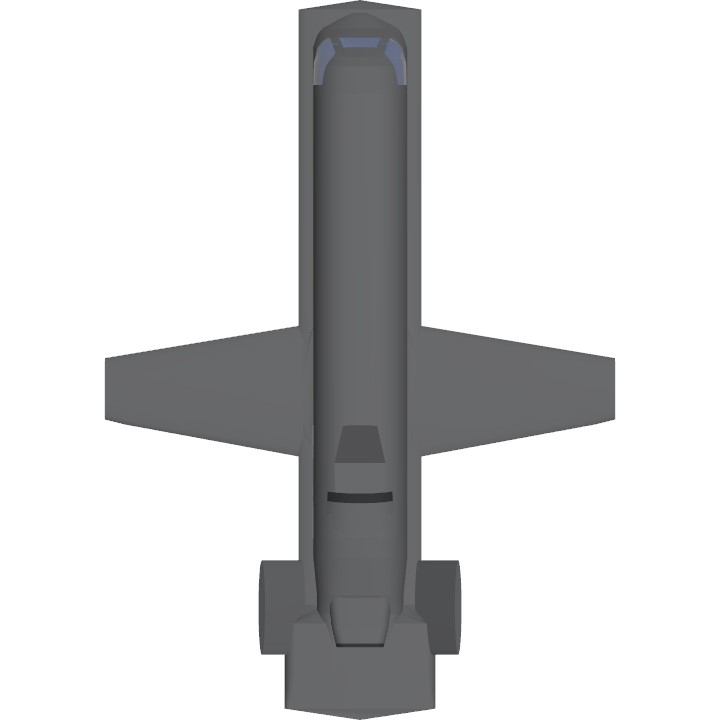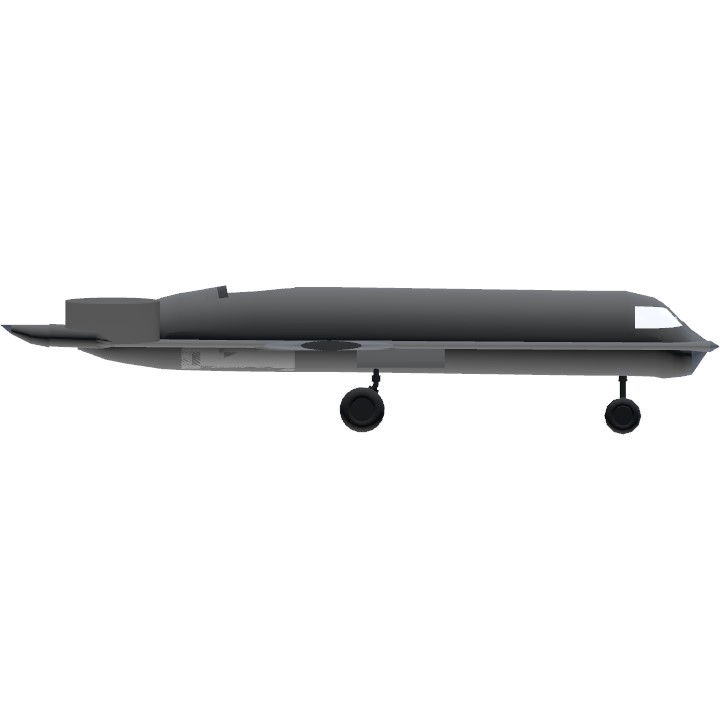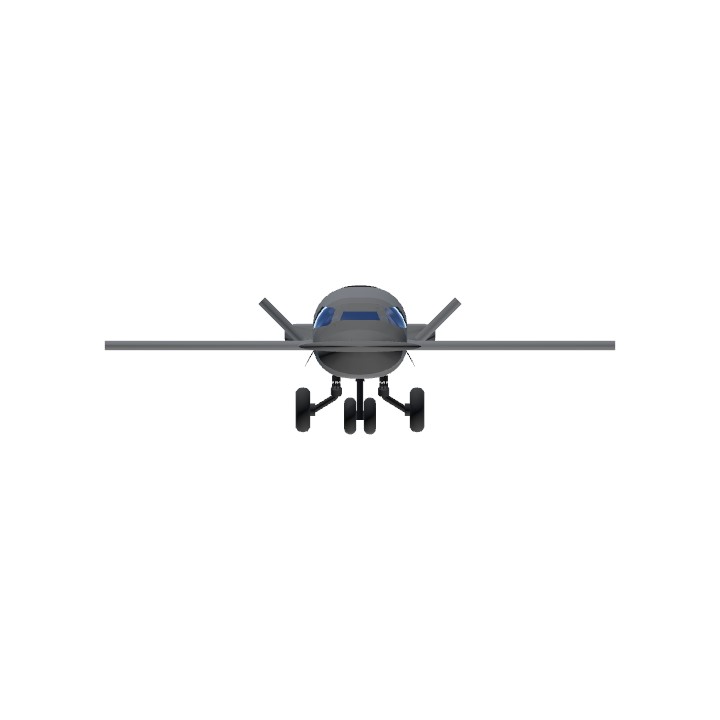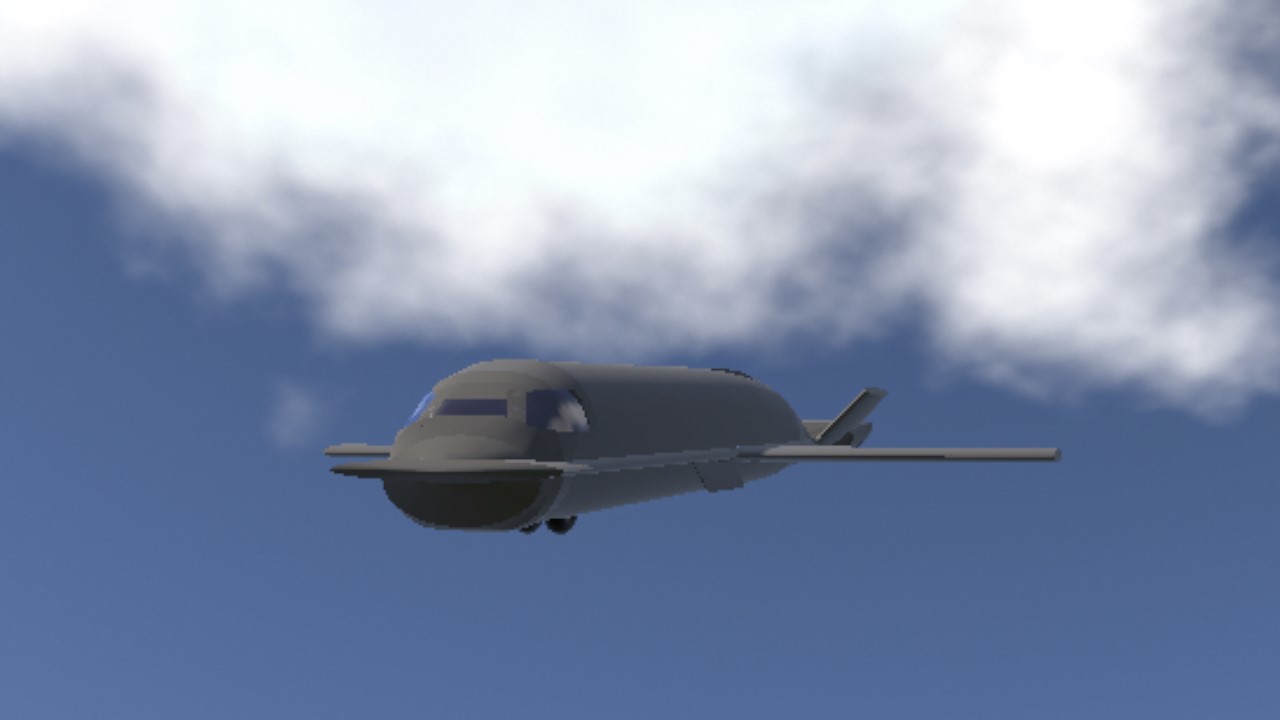
I tried ok don’t be mean.
Wiki
Development:
Unveiled by the U.S. Air Force on 30 April 1996, the Tacit Blue Technology Demonstration Program was designed to prove that such an aircraft could continuously monitor the ground situation deep behind the battlefield and provide targeting information in real time to a ground command
In December 1976, DARPA and the U.S. Air Force initiated the Battlefield Surveillance Aircraft-Experimental (BSAX) program, which was part of a larger Air Force program called Pave Mover. The BSAX program's goal was to develop an efficient stealth reconnaissance aircraft with a low probability of intercept radar and other sensors that could operate close to the forward line of battle with a high degree of survivability.
Tacit Blue represented the "black" component in the larger "Assault Breaker" program, which intended to validate the concept of massed standoff attacks on advancing armored formations using smart munitions. The Pave Mover radar demonstrators provided the non-stealth portion of the program's targeting system, whereas Tacit Blue was intended to demonstrate a similar but stealth capability, while validating a number of innovative stealth technology advances.[1]
The radar sensor technology developed for Tacit Blue evolved into the radar now being used by the E-8 Joint STARS aircraft.[2]
Tacit Blue was given the designation of "YF-117D" by the Air Force, implying it was a variant of the Lockheed F-117 stealth fighter.[3]
Design:
Tacit Blue, nicknamed "the whale" (and sometimes also called an "alien school bus" for its only slightly rounded-off rectangular shape),[7] featured a straight tapered wing with a V-tail mounted on an oversized fuselage with a curved shape. It was the first stealth aircraft to feature curved surfaces for radar cross-section reduction.[8] Northrop would use this stealth technology on the B-2 bomber. A single flush inlet on the top of the fuselage provided air to two medium-bypass turbofan engines. Tacit Blue employed a quadruply redundant digital fly-by-wire flight control system to help stabilize the aircraft about its longitudinal and directional axes.
Operational history:
The aircraft made its first successful flight on February 5, 1982, in Area 51, at Groom Lake, Nevada, flown by Northrop test pilot Richard G. Thomas.[6] The aircraft subsequently logged 135 flights over a three-year period. The aircraft often flew three to four flights weekly and several times flew more than once a day.
Another Tacit Blue test pilot, Ken Dyson, told CNN in 2014 that Northrop had manufactured additional major components for the jet, which amounted to half of a second plane. "If we lost one, we could have a second one up and flying in short order," Dyson said.[9]
After reaching about 250 flight hours, the aircraft was placed in storage in 1985. In 1996, after Tacit Blue was declassified, it was placed on display at the National Museum of the United States Air Force at Wright-Patterson Air Force Base, near Dayton, Ohio and has been on display in the new fourth hangar at the museum since June 2016.[10]
Specifications:
General characteristics
Crew: 1
Length: 55 ft 10 in (17.02 m)
Wingspan: 48 ft 2 in (14.68 m)
Height: 10 ft 7 in (3.23 m)
Airfoil: Clark Y mod.[11]
Gross weight: 30,000 lb (13,608 kg)
Powerplant: 2 × Garrett ATF3-6 turbofan engines, 5,440 lbf (24.2 kN) thrust each
Performance
Maximum speed: 250 kn (290 mph, 460 km/h)
Service ceiling: 25,000–30,000 ft (7,600–9,100 m) operating altitude
Thrust/weight: 0.36

Pave Mover Radar Antenna

Northrop's B-2 chief engineer John Cashen[4] was quoted in 1996 as having said, "You're talking about an aircraft that at the time was arguably the most unstable aircraft man had ever flown."[5][6]

YF-117D Cockpit
Specifications
General Characteristics
- Created On iOS
- Wingspan 22.2ft (6.8m)
- Length 31.2ft (9.5m)
- Height 6.5ft (2.0m)
- Empty Weight 5,766lbs (2,615kg)
- Loaded Weight 6,364lbs (2,886kg)
Performance
- Power/Weight Ratio 1.588
- Wing Loading 63.0lbs/ft2 (307.4kg/m2)
- Wing Area 101.1ft2 (9.4m2)
- Drag Points 2611
Parts
- Number of Parts 71
- Control Surfaces 4
- Performance Cost 347